
← Mushroom Library
Lion's Mane
Hericium erinaceus
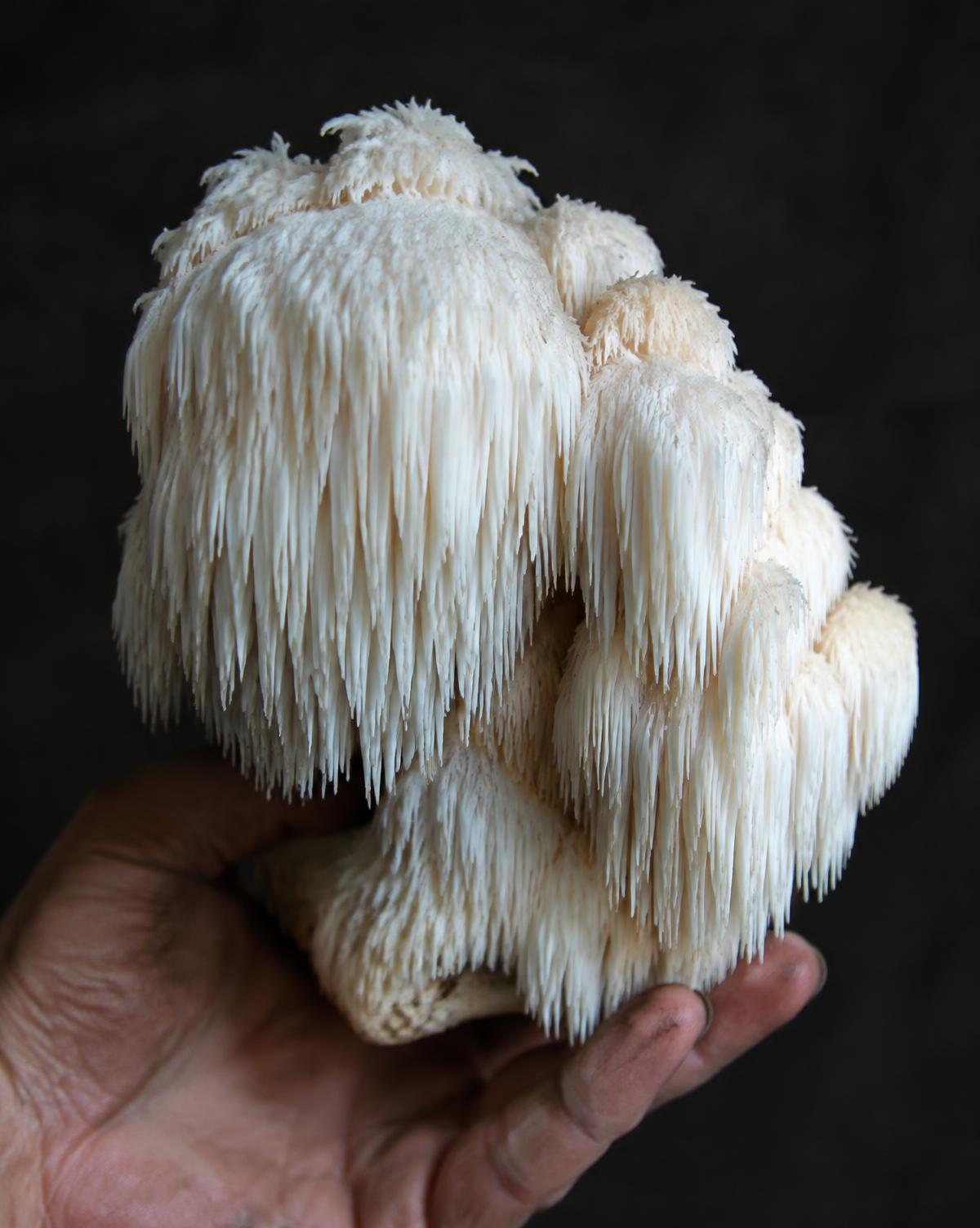
A white, cascading tooth fungus with no cap and no gills — one of the most recognizable mushrooms we grow.
- 01Appearance
- Lion's Mane forms a single rounded mass of soft, downward-hanging spines. Young fruiting bodies are bright white and yellow slightly with age. There is no cap, stem or gill structure in the familiar sense — spores are released from the surface of the spines themselves.
- 02How it grows
- In the wild, Hericium erinaceus is a wood-decay fungus found on hardwoods, often on wounds of living or recently dead trees. Its mycelium digests lignin and cellulose before forming fruiting bodies in cool, humid conditions.
- 03How we cultivate it
- We grow Lion's Mane on organic hardwood substrate inside controlled environments, managing humidity, fresh-air exchange, light and temperature through each stage. Detailed cultivation parameters for our farm will be published here once verified by the grow team.
- 04Culinary history
- Fresh Lion's Mane has a mild, delicate flavor and a texture often compared to crab or lobster. It is commonly torn into pieces and seared in a dry pan before adding fat.
- 05Traditional use
- Lion's Mane has a long history of use in East Asian food and traditional practice, where it has been valued for centuries.
- 06Current research
- Lion's Mane is an active subject of scientific study. We will summarize current research here with citations to primary sources. Nothing on this page is a medical claim or intended to diagnose, treat, cure or prevent any disease.